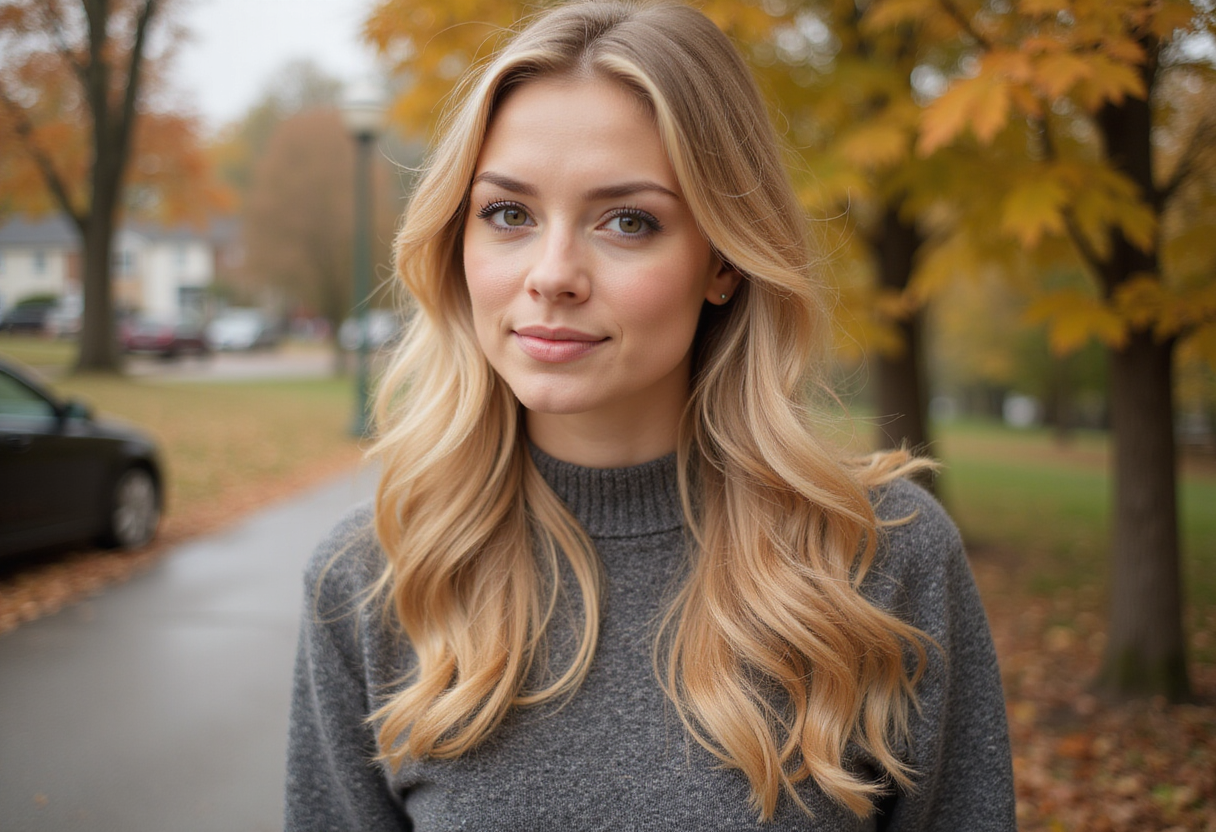
Victoria Beckham Puts "Honey Ombré" Back on the Fall Menu
AOL credits Victoria Beckham with reviving honey ombré for fall. The headline is the whole story — no colorist, no formula, no method reached our desk.
- Words
- Tom Whitfield
- Published
- Read
- 3 min read
Updated
Victoria Beckham has been credited with reviving "honey ombré" for fall, according to a headline published by AOL.com. That single sentence is the entire verified content of this story. No colorist is named. No formulation, no developer volume, no lightener brand appears in the material available to Shear Daily.
The claim matters because ombré is a technique with real technical demands, not a mood board word. Done properly, it requires a hand-painted or foiled transition from a darker root to a lifted end tone. "Honey" specifies the target: a warm gold, usually achieved by controlling underlying pigment through levels seven to nine. Get the lift wrong and the client leaves with brass, not honey.
What does the headline actually establish?
Three things, no more. First, a celebrity association: Beckham. Second, a named trend: honey ombré. Third, a seasonal peg: fall. The source promises a recreation method — "How to Recreate It Now" — but the body text did not reach our newsroom. Only the link and the publication name, AOL.com, did.
I will not invent the missing steps. Plenty of coverage in this genre supplies them. Typically that means a balayage sweep, a gloss to refine tone, and a bond-builder during processing. But this source says none of it, and attribution discipline exists for a reason. A technique quoted without a source is a technique nobody stands behind.
What does this change for stylists?
Probably little in the chair this week. Beckham's name drives search traffic and client consultations, not salon protocol. Clients will arrive asking for "honey ombré like Victoria Beckham." That request is real. The color theory behind it is unchanged by celebrity endorsement.
Expect the consultation to need precision. "Honey" sits on the warm side of the blonde spectrum. Clients with cool-toned expectations may hear "honey" and picture beige. The gap between those two tones is where rework bookings come from. Write the target tone down before mixing.
Hair type and texture will decide the method more than the trend will. The source gives no texture information. Fine hair may lift faster and need lower developer and shorter processing. Coarser textures may resist warm deposition and need a second pass or a higher lift. None of this appears in the source material. All of it will appear in the appointment.
The nostalgia angle, tested
"Nostalgic" is doing heavy lifting in that headline. Ombré peaked roughly a decade ago, before balayage displaced it as the dominant hand-painted technique in salons. Revivals are common in this cycle. They are also commercially convenient for publishers, since old trend content can be refreshed cheaply.
That does not make the revival false. It makes it unproven here. No salon data, no colorist quote, no brand statement accompanies the claim. A trend report without a single working stylist quoted is a marketing signal, not market evidence.
The practical read
If client requests for honey ombré rise this fall, salons that already master soft, warmed blonde transitions will absorb the demand without changing anything. Salons that rely on single-process cool blondes may want to revisit their warm-tone gloss inventory before the bookings arrive.
The source ends its usefulness where it began: a headline, a celebrity, a color name, a season. Whether AOL's accompanying how-to contained sound technical guidance could not be verified by this desk. Watch the consultation requests, price the extra toning time, and treat the trend as probable until the colorists weigh in.
Source — Source: Google News: Hair color trends
More from Tom Whitfield
Show full bio
News editor covering money, funding and market shifts around Professional cutting, styling and color technique at Shear Daily.
48 articles