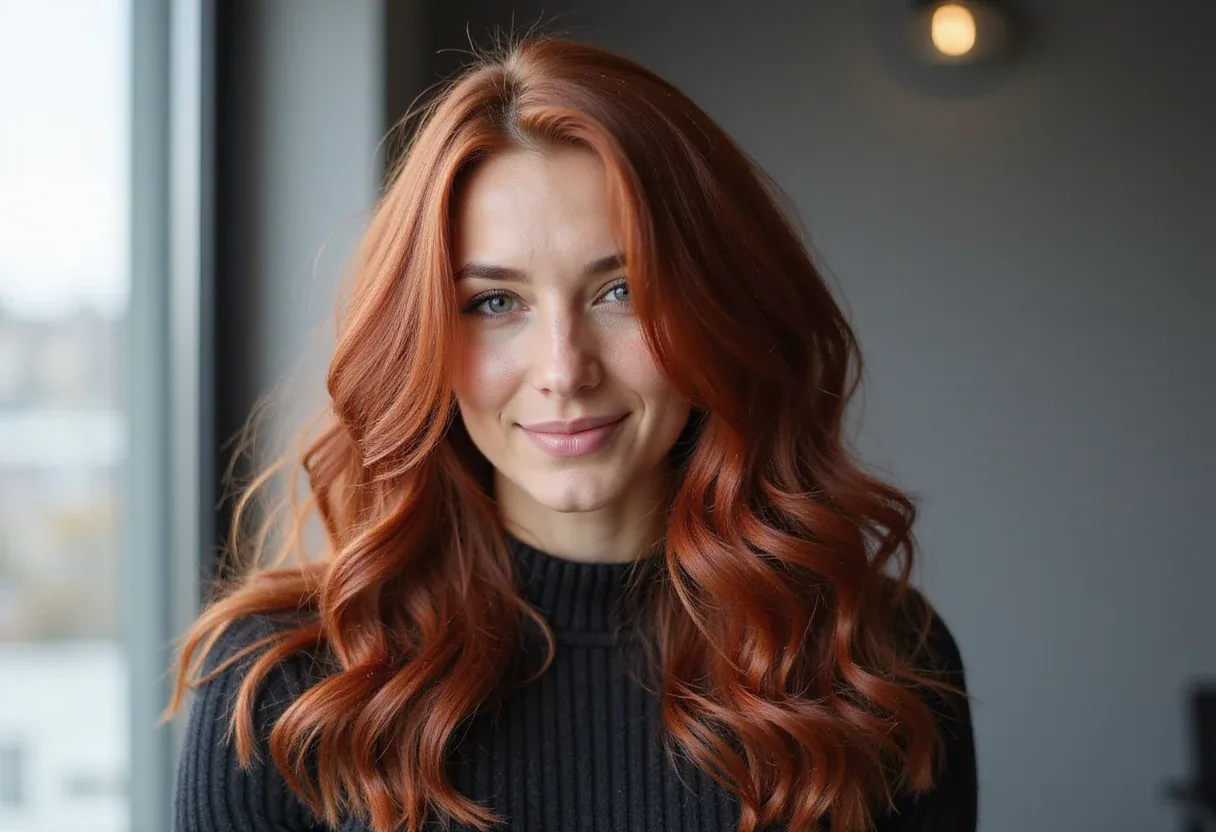
Pinstripe Color Trend Returns to Professional Salon Floors
Salon Today has flagged pinstripe highlighting as a back-to-business trend, with stylists returning to 1–2mm subsections and mid-tier pricing to rebuild color revenue.
- Words
- James Calloway
- Photography
- AI-generated
- Published
- Read
- 3 min read
Updated
Trade publication Salon Today has flagged the pinstripe highlighting technique as a back-to-business trend, identifying the fine-section color method as a service returning to professional salon menus.
Pinstriping describes a highlighting method in which stylists subdivide sections into very thin subsections — typically 1 to 2 millimeters wide — using a backcombing or weaving motion to deposit tone in narrow, vertical bands. The result reads as a soft stripe rather than a traditional foiled highlight, and the underlying pigment of the client's natural or base color remains visible through the deposited tone.
What makes pinstriping distinct from foil highlights or balayage?
The technical difference lies in section width, product placement and the level of contrast produced. Three procedural markers separate pinstripe work from conventional highlighting:
- Subsection width: 1–2 millimeters, usually produced by a backcombing motion (also called teasel or rat-tail teasing) before color application
- Application method: freehand painting or precision board work, often without full foil encapsulation
- Saturation depth: lighter than a standard highlight, so the underlying pigment stays visible
By comparison, standard foil highlights use wider weaves or slices — generally between 5 and 15 millimeters depending on density and desired result — and isolate each section with foil or film to control developer activity. The narrower subsection in pinstriping reduces visible contrast between treated and untreated hair and produces a multi-tonal effect without the hard line of demarcation that wider foils can create at the root.
Why is the technique linked to a back-to-business recovery?
Salon Today's framing places pinstripe work inside a revenue discussion for operators rebuilding clientele after extended closures. Two commercial factors support that positioning:
- Service time efficiency. Stylists can typically complete a full-head pinstripe service in 60 to 90 minutes depending on length and density, comparable to a partial foil appointment.
- Mid-tier pricing. Color services using the technique have historically sat between a standard partial highlight and a full balayage, allowing salons to capture mid-tier revenue without extending chair time.
The combination gives operators a service that fills a price gap and pulls clients back into a regular color rotation — a structure that suits both commission-based stylists and booth-renters managing their own pricing.
What does the trend signal for 2026 color menus?
Coverage positions pinstriping as a transitional service — a method for reintroducing dimensional color to clients who postponed appointments. The technique accommodates both warm-toned and cool-toned palettes, works across fine, medium and coarse textures provided the subsection is matched to density, and produces a softer grow-out pattern than traditional foiling.
On shorter crops, the stripes read as a graphic accent. On shoulder-length and longer hair, they create a multi-tonal effect that softens regrowth lines over a six- to eight-week cycle.
Salon Today's identification of the trend points to a wider market signal: operators are watching for color services that combine grow-out flexibility with shorter chair times, a pricing structure that has shaped service menus through the post-recovery period and looks set to carry into the next booking cycle.
Source — Source: Google News: Salon business
More from James Calloway
Show full bio
Staff writer covering money, funding and market shifts around Professional cutting, styling and color technique at Shear Daily.
60 articles