2026 Salon Today 200 Business Builders: Risk-Taking Salons Reveal Payoff Numbers
Elan Hair Studio cut its space by two-thirds and hit nearly $3M with six chairs, leading the 2026 SALON TODAY 200 Business Builders category announced today.
- Words
- Priya Raman
- Filed
- Salon Business
- Published
- Read
- 4 min read
Updated
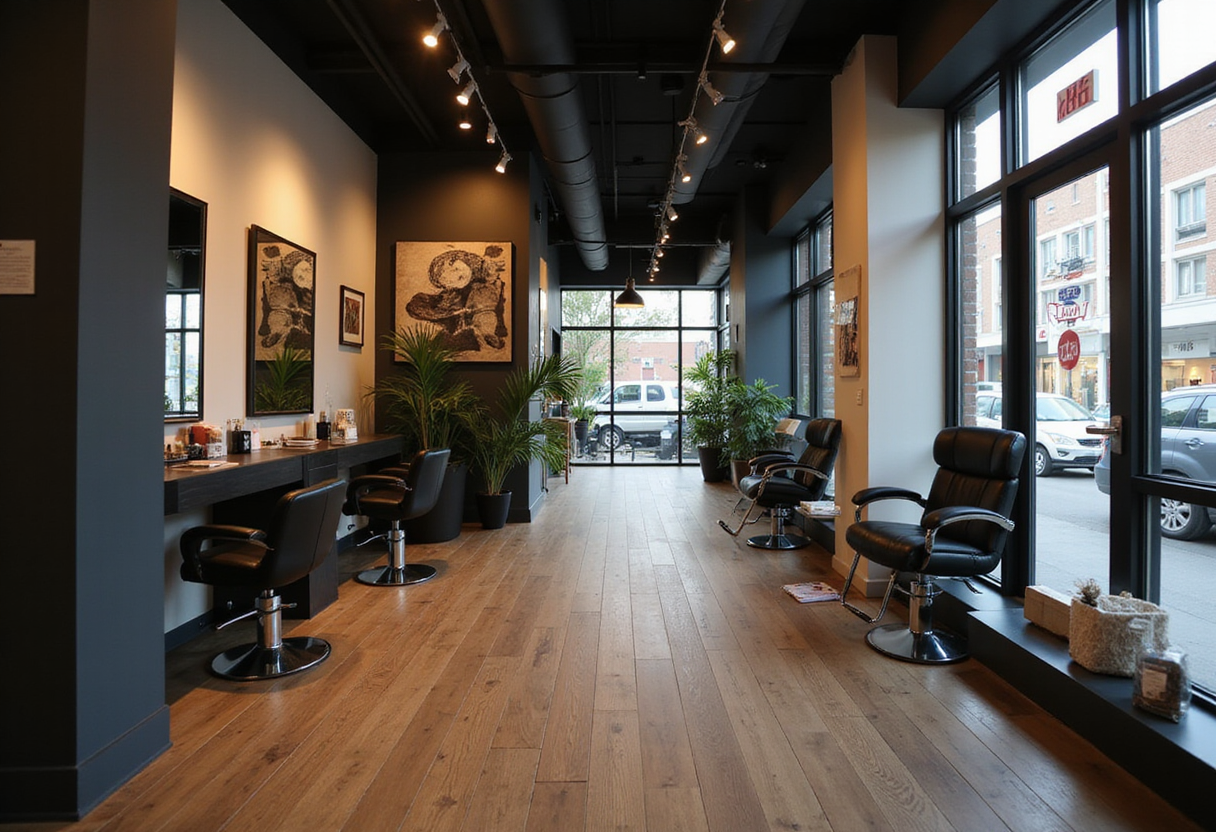
Elan Hair Studio in Spring Lake, New Jersey cut its footprint by two-thirds, moved into a 1,000-square-foot space with six chairs, and still reached just under $3 million in revenue in the first year. That number anchors the Business Builders category of the 2026 SALON TODAY 200, announced today by SALON TODAY on Day 1 of its annual honors rollout.
The category recognizes salons whose strategic risks — new service categories, revised business practices, ownership moves — translated into measurable revenue growth. This year's honorees span single-location studios to multi-site operations with hundreds of employees, and each supplied the metrics behind its decisions.
What drove the biggest revenue jumps?
Bombshell Salon & Spa in Holland, Michigan (5,000 square feet, 29 employees, $50 average cut and style) rebuilt its bridal department around a dedicated coordinator, new Honeybee and Trello systems, expanded services and space, and stronger local vendor relationships. Owner Rachel Harned reported: "We grew our bridal revenue by more than $108,000 in one year."
Hair & Co Bklyn in Brooklyn, New York grew its flagship salon more than $100,000 by rebuilding the consultation from the ground up. Owners Allyson and Shannon King matched promotions to coaching — treatment conversations in consultations paired with treatment promos — then moved to a buy-two-get-one-free offer once momentum built. They also shifted to coaching each generation differently.
The Langmore Salon in Mullica Hill, New Jersey (1,000 square feet, 13 employees) scripted its front desk for rebooking, add-on services and retail closing. The results: average service ticket rose from $84 to $110, average retail ticket gained $3, and the salon set up a tracker with rewards and raises tied to goals. Owner Heather Coles also reported rebooking movement — the salon's figures listed a change from 59% to 51%, a discrepancy the source presents as stated.
How did ownership and structure changes pay off?
D'Ametris Aveda in Broomfield, Colorado (1,374 square feet, 5 employees, $81 average cut and style) launched a private-label hair care line, followed by a hairbrush. Owners Ame and Dennis Metcalfe said: "We learned to break the habit of buying on autopilot. Today, we own our commercial salon property, with an attached rental property, which is also building wealth." Their retail mix now leads with D'Ametris Solutions alongside Aveda.
Kenneth's Salons and Spas in Columbus, Ohio operates as 100% employee-owned, with 327 employees across six locations totaling 49,400 square feet and a $68 average cut and style. The company developed a hybrid Spa Bar concept aimed at a younger demographic seeking faster, social, maintenance-driven services. Early results against the same period the previous year: spa customer counts up 10%, monthly facials up 100%, upsells up 20%, and nail services showing double-digit growth.
Can loyalty programs and data move the needle?
Gadabout SalonsSpas and Verve Salons in Tucson, Arizona (six locations, 225 employees, $65 average cut and style) built a "Locals Only Club" points program in late July, using AI tool Gemini to research top-performing loyalty programs and build the execution strategy. The Westerbeke-owned group signed up 4,500 members — almost 42% of its guests — in the first five weeks, and retail sales began to grow.
Intrigue Salon in Marietta, Georgia (3,500 square feet, 40 employees, $88 average cut and style) learned at a Data Driven event that its online booking rates sat well below benchmark averages. The salon identified services that book easily online, rewrote service titles with descriptions, and ran a campaign that began with team and client education. As online booking rose, the front desk became more client-centric with guests in the salon.
DeCola Salon in Exton, Pennsylvania built a "100% Satisfaction Guarantee" framework that captures every client's voice after each visit, converts dissatisfied responses into a structured recovery path, and feeds data into coaching and leadership decisions. Eight months after building the framework, owner Lou DeCola reports the concept is being developed into a software solution for the beauty industry.
What about people strategies?
Paris Parker Salons and Spas in Hammond, Louisiana (202 employees, $77 average cut and style) credits a recruitment strategy launched two years ago: hiring jumped from 15–20 stylists per year to 50 last year. The Neill Corporation operation partners deeply with cosmetology schools — learning curricula, building educator relationships, understanding culture — with a stated goal of two hairdressers per chair.
Revive Day Spa in Aberdeen, South Dakota reports a 100% apprentice graduation rate from 2024 to date by filtering out dozens of mismatched applicants. Luscious & Co in Shelton, Connecticut introduced a "potential sheet" — a coaching worksheet mapping each stylist's financial potential, expert-led service ranking and redeemed behaviors. Jonathan Kane Salon & Spa in Homewood, Illinois relies on daily face-to-face coaching. Interlocks Salon & Medspa in Newburyport, Massachusetts shifted from "brand user" to "brand collaborator," strengthening its position as an educational hub.
The Business Builders category opens the 2026 SALON TODAY 200 announcements, with additional category honorees to follow in the coming days.
Source — Original: beauty-assets.bobitstudios.com