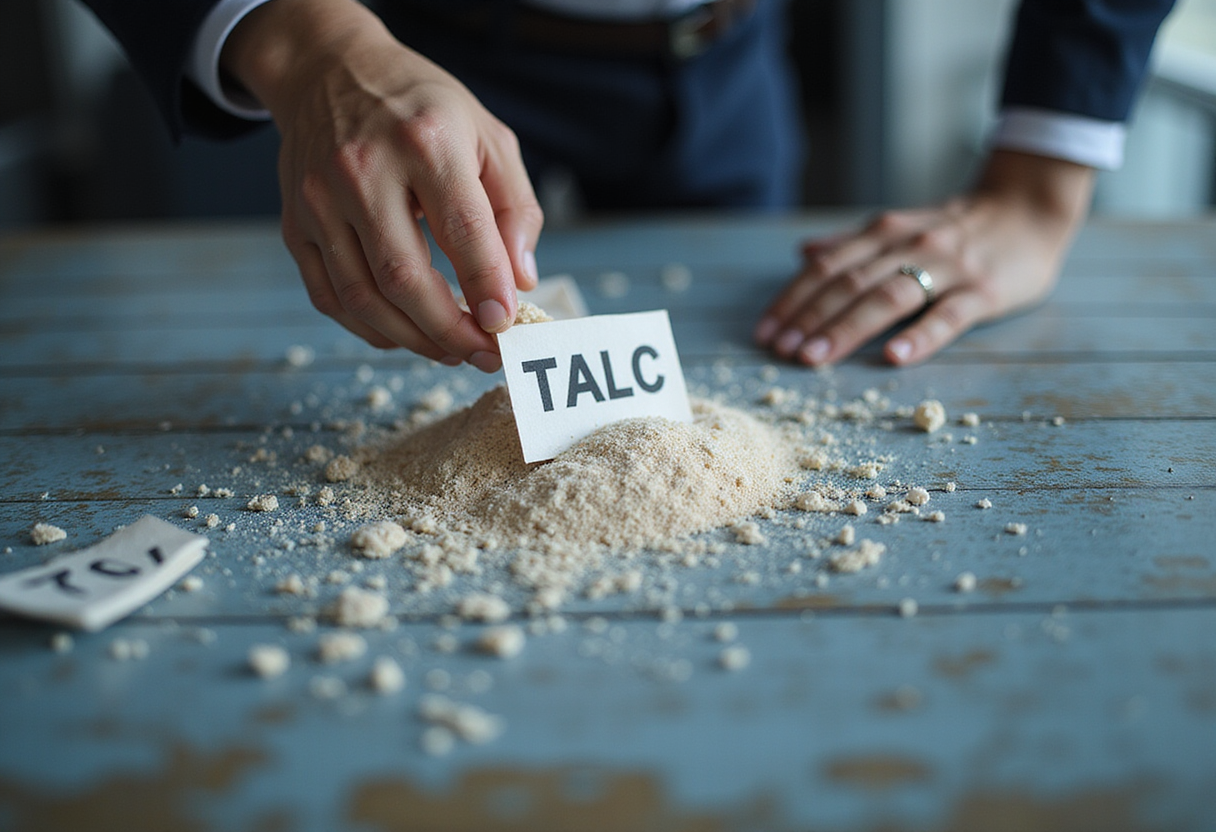
L'Oréal Reportedly Weighs Talc Liability Transfer Amid 760 US Suits
L'Oréal engages Weil Gotshal & Manges and Ducera Partners to weigh options on ~760 US talc proceedings, while 11,554 hair-relaxer MDL cases and a 10 September Arizona AG suit keep pressure on the French group.
- Words
- Tom Whitfield
- Photography
- AI-generated
- Filed
- Industry & Market
- Published
- Read
- 2 min read
Updated
L'Oréal has engaged Weil Gotshal & Manges and Ducera Partners to study options for shifting its US talc-related liabilities, the Wall Street Journal reported this week, citing people familiar with the matter.
The mandate centers on approximately 760 pending US proceedings tied to allegations of asbestos in talc-containing cosmetics, according to L'Oréal's half-year financial report covering the period ending 30 June. None of those cases have reached trial. Litigants have dismissed some claims and settled others; the company says it "strongly contests" the allegations.
How large is the overall US exposure?
The talc docket captures only part of L'Oréal's litigation footprint. As of 30 June, L'Oréal's US entities were defendants in 11,554 consolidated federal proceedings inside a multi-district litigation (MDL) at the US District Court for the Northern District of Illinois. A further 1,082 individual or consolidated actions sit in various state courts.
The larger counts stem primarily from lawsuits alleging that chemical hair relaxers — including lines historically marketed to textured-hair consumers — caused cancer without adequate risk disclosure.
What does the Arizona filing add?
On 10 September, the Arizona Attorney General's Office filed a consumer fraud action against Softsheen-Carson, the L'Oréal-owned textured-hair brand, and parent company L'Oréal USA.
A L'Oréal USA spokesperson rejected the complaint in a statement to trade press: "The allegations in the lawsuit have neither legal nor scientific merit." The spokesperson added: "L'Oréal's highest priority is the health and wellbeing of all our consumers. Our products are subject to a rigorous scientific evaluation of their safety by experts who also ensure that we strictly follow all regulations in every market in which we operate."
Why explore a transfer now?
Talc claims have pursued cosmetics manufacturers, pharmaceutical firms and talc suppliers for years over alleged asbestos contamination linked to ovarian cancer and mesothelioma. Several peer companies have already settled or restructured overlapping exposure.
A formal liability transfer — channeling claims into a special-purpose vehicle or third-party trust — would let L'Oréal ring-fence legacy costs while preserving operating cash flow. Weil Gotshal & Manges and Ducera Partners had not commented publicly at press time, the WSJ noted.
What it means for the salon channel
For professional distributors, textured-hair stylists and Black-hair-care retailers, the outcome carries direct stakes. Softsheen-Carson's relaxer portfolio remains on retail shelves serving the salon trade. An adverse Arizona finding — or a structured settlement absorbed by the parent — could reshape retailer disclosure obligations under state consumer-fraud statutes. Watch also for any spillover into bond ratings, as a documented liability transfer often frees dividend capacity across multinational beauty groups.
L'Oréal's next half-year report, expected in February, should disclose an updated caseload count and signal whether the adviser mandate has produced a concrete transaction or settled into a monitoring arrangement.
Source — Original: wsj.com