Blowdry Bars Build Growth by Skipping Cuts and Color Services
Blowdry bars are expanding on a stripped-down menu: no haircuts, no color. The format trades the slowest services in a traditional salon for higher chair turnover.
- Words
- Olivia Hart
- Photography
- AI-generated
- Filed
- Salon Business
- Published
- Read
- 3 min read
Updated
By Olivia Hart
The blowdry bar segment is expanding on a deliberately narrowed service list that excludes haircuts and color.
ABC News frames the format as "booming" in reporting that highlights the service model as a defined growth category across the U.S. salon industry.
What does a blowdry bar actually sell?
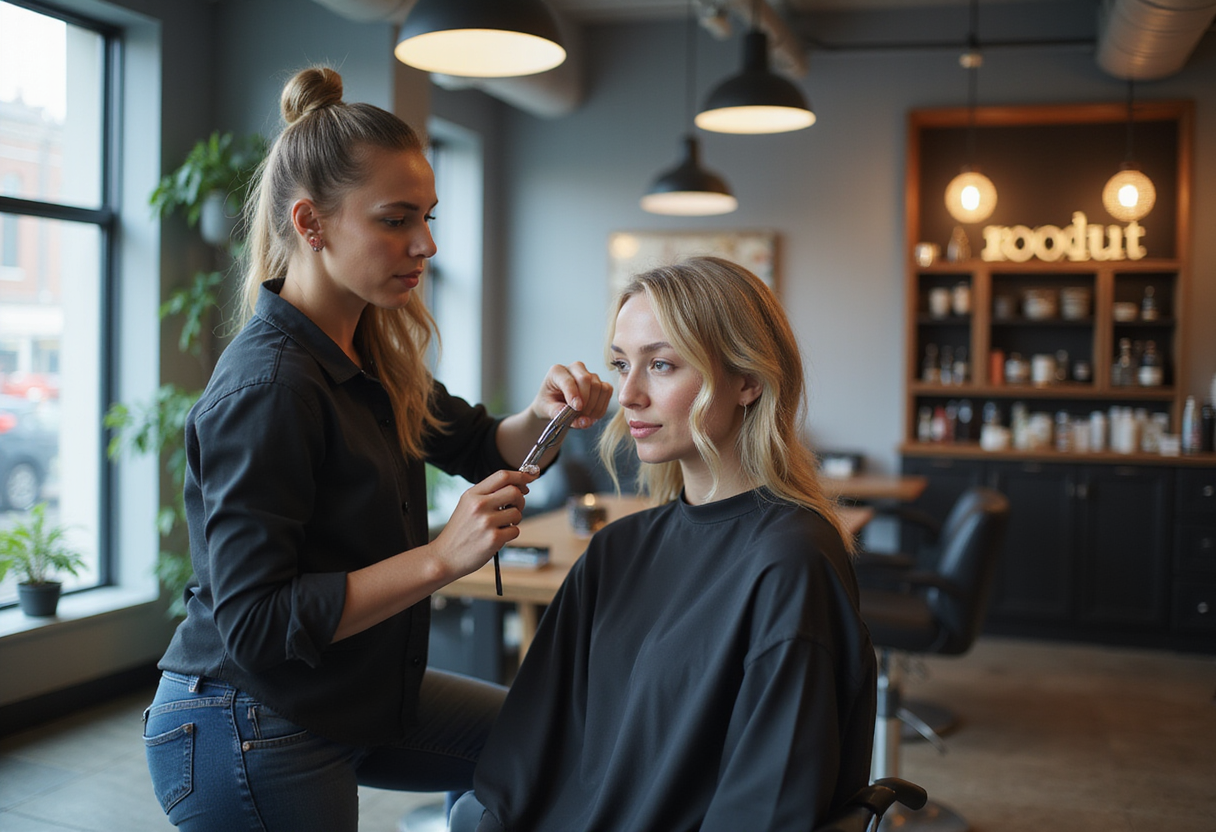
A blowdry bar — also called a blowout bar — operates as a salon concept built around a single repeatable service: a professional blow-dry finished with a styled look. The workhorse tool is a round brush (a cylindrical brush paired with a concentrator nozzle on a dryer to create tension and smooth the cuticle), used to produce smooth, voluminous or curled finishes.
No scissors touch the hair. No color is mixed. No developer (the peroxide-based agent used to lift or deposit pigment) is poured. No toner (a demi- or semi-permanent color used to neutralize unwanted undertones after lightening) gets applied. The result is a service menu that fits on a single line of a price card — a sharp contrast to the multi-page service menus common in traditional salons.
Why drop cuts and color from the menu?
Cuts and color carry the longest chair times and the steepest training and licensing requirements in a traditional full-service salon. In most U.S. states, cosmetology licensure covers cutting and styling, but color application often requires an additional separate permit — and color formulation (the process of choosing and mixing tones that neutralize underlying pigment and reach a target shade) takes years to develop.
By sticking to wash-and-style, blowdry bars shorten the onboarding path for new hires, widen the staffing pool, and reshape the appointment math. A standard cut-and-color visit runs 90 minutes to three hours; a blowout fits inside a 30-to-45-minute window. That pace matches the express-service economics that have reshaped nail salons and brow bars over the past decade.
The format also changes how operators pay stylists. Many blowdry bars run on hourly wages plus tips or on a flat per-service split rather than the booth-rental model common in traditional salons, which gives operators more direct control over scheduling and pricing.
What does the boom signal mean for full-service salons?
The growth framing points to a consumer behavior shift: clients are splitting the maintenance visit from the styling visit. Some book both at the same operator. Others split them between a traditional salon and a blowdry bar.
For independent operators, the throughput case is straightforward: a chair can run more appointments per day on blowouts than on cuts or color, even at a lower per-ticket price. For multi-service salons, the strategic question is whether to add a dedicated blowout station inside their existing footprint or let that client walk to a competitor.
The category sits alongside other express-beauty concepts — nail salons, brow bars, lash studios — that have used the same playbook: narrow the menu, shorten the appointment, stack the chair. The model works because it converts a service that used to be bundled inside a multi-hour visit into a stand-alone purchase.
The format is positioned to keep expanding into secondary markets and suburban retail centers through the next cycle, where the walk-in traffic pattern suits the model.
Source — Source: Google News: Salon industry
More from Olivia Hart
Show full bio
Correspondent covering people, launches and day-to-day practice in Professional cutting, styling and color technique at Shear Daily.
56 articles